Climatic characteristics that give rise
to each vintage of our wines
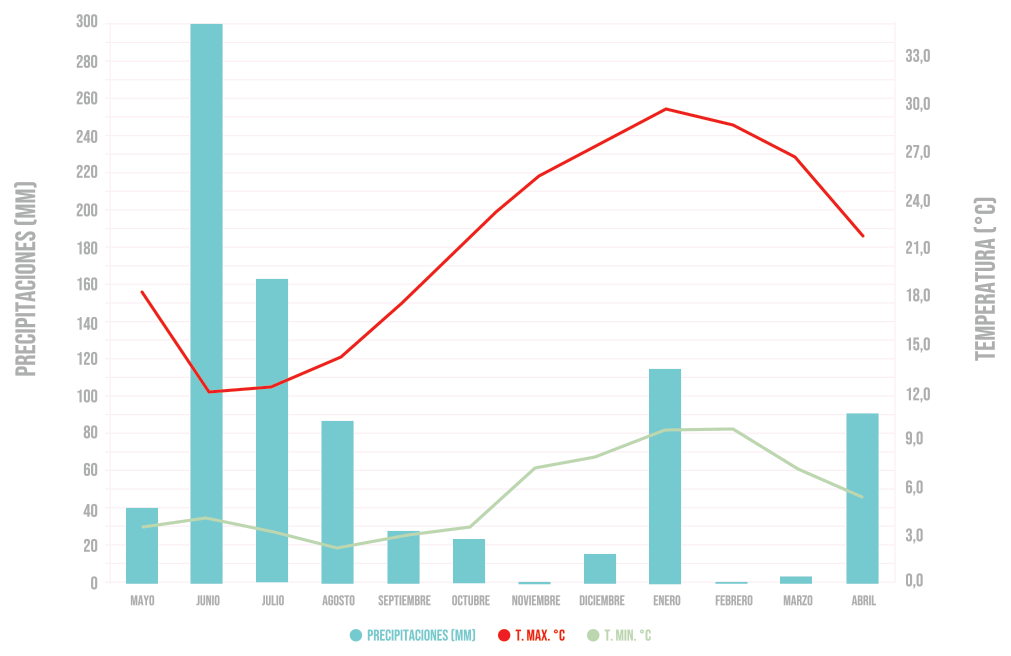
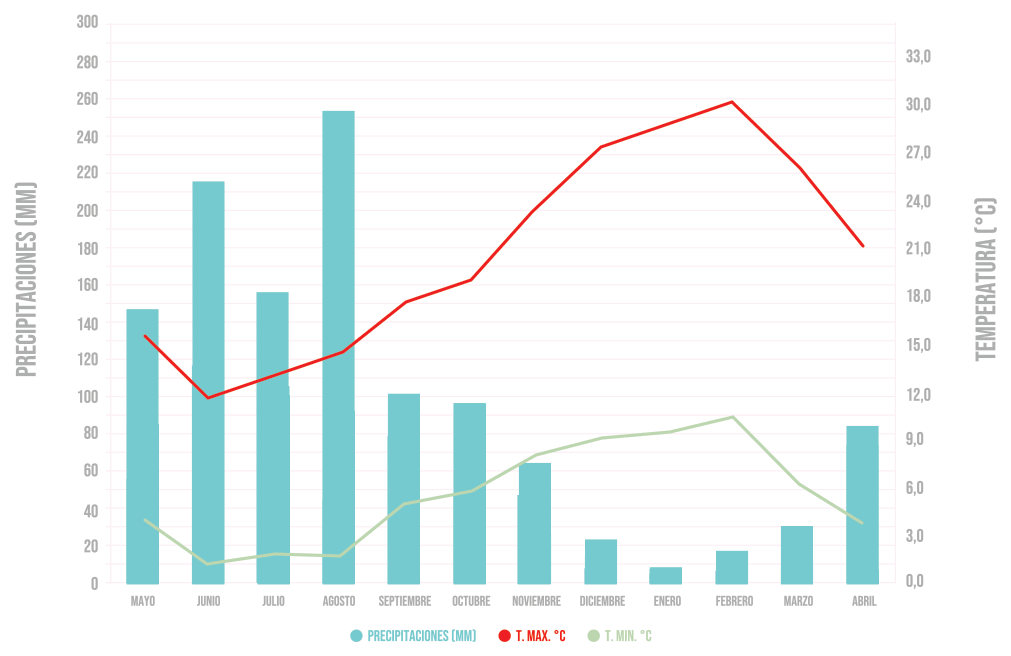
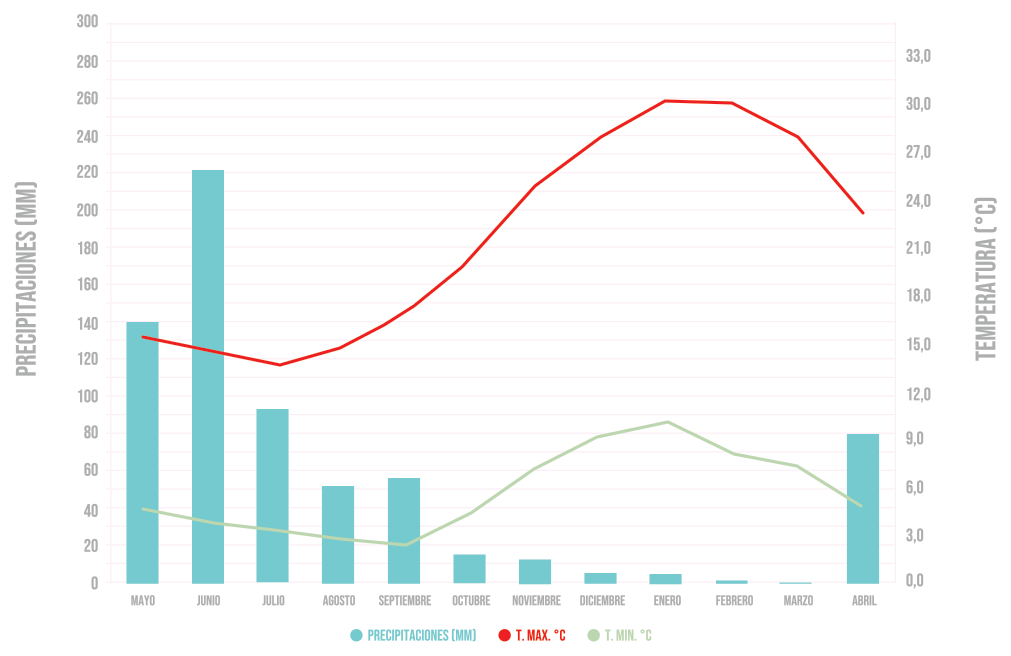
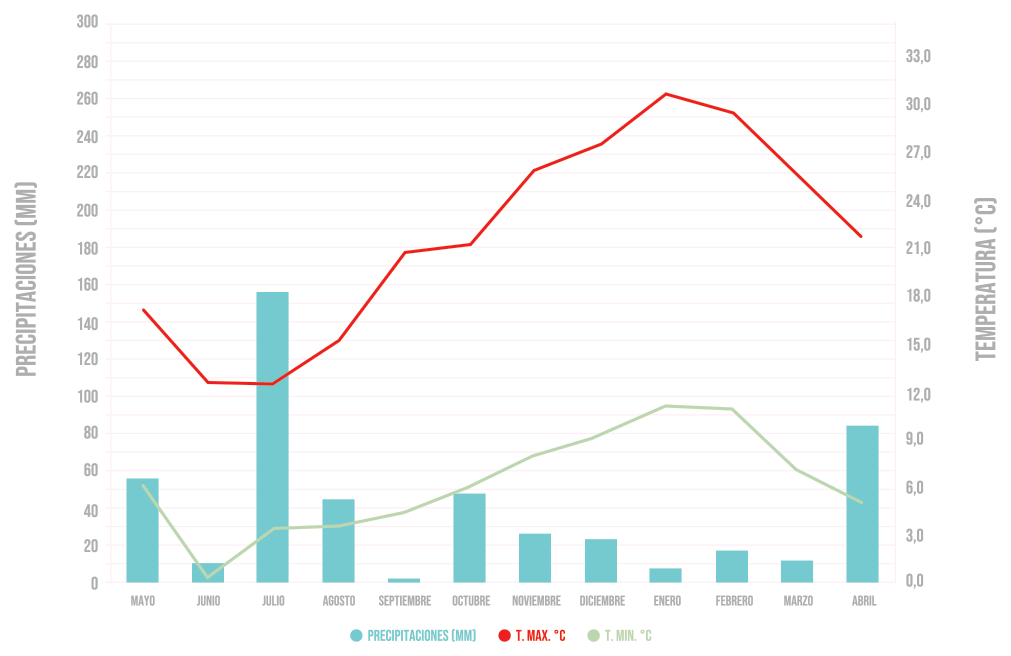
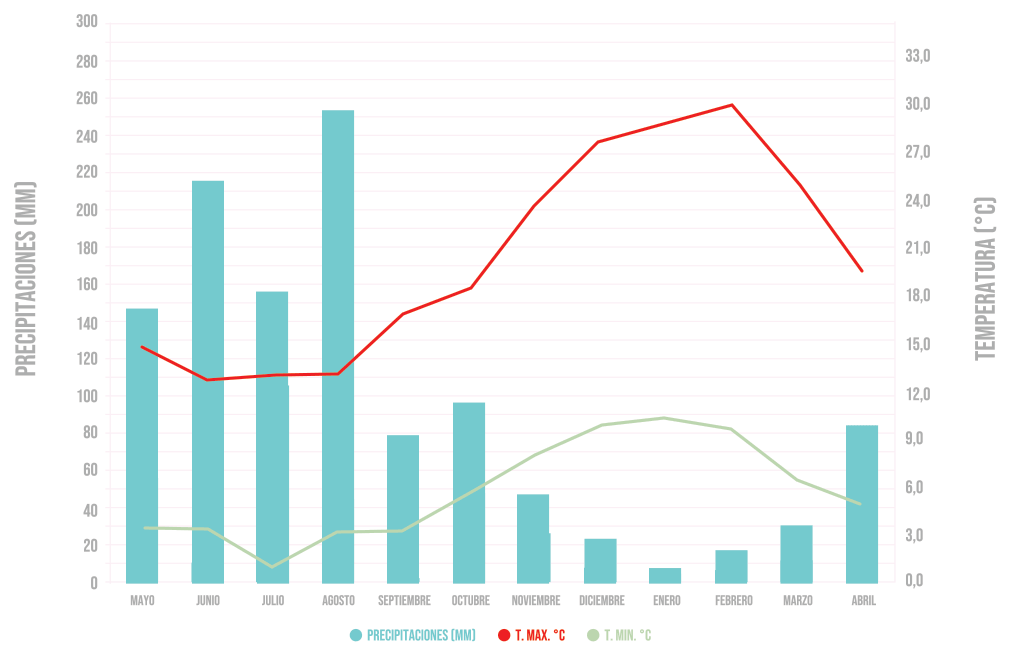
In the Southern Hemisphere, the wine cycle is considered to begin in May of the year prior to the harvest (n-1). This period starts with leaf fall, which coincides with the end of the grape harvest and fermentation. Budbreak occurs in September, vegetative growth extends until December or January, and grape ripening takes place between February and April, depending on the region and variety. The dryland interior of southern Chile has a Mediterranean climate with marked seasonality: cool autumns, rainy winters, mild springs, and hot, dry summers. What distinguishes it from other Mediterranean regions is the almost total absence of rainfall during the vine's growth and ripening stages. This characteristic is due to the influence of the Humboldt Current, a cold ocean current that runs along the Pacific coast and maintains ocean temperatures between 8°C and 14°C in our area, preventing cloud formation and rainfall in summer. As a result, rainfall is concentrated almost exclusively in winter. This condition creates three key realities for our viticulture in the dryland interior: The first is that, working with vineyards without artificial irrigation (dryland farming), the water available to the plant comes solely from winter precipitation. This replenishes the soil's water reserves, allowing the vines' deep roots to access the necessary moisture during the growth and ripening period. This natural water stress concentrates the flavors and enhances the expression of the terroir, resulting in fresh, balanced wines with great depth. The second is the excellent health of the grapes. The summer dryness and low atmospheric humidity greatly limit the appearance of fungal diseases, such as downy mildew. Unlike many areas of the Northern Hemisphere, where this disease necessitates frequent copper treatments—which, in the long term, accumulate heavy metals in the soil—here the phytosanitary burden is much lower. This facilitates a more natural and ecosystem-friendly viticulture. The third distinctive characteristic, also favored by the Humboldt Current, is the wide temperature range during ripening: differences of up to 20°C between the maximum daytime temperature and the minimum nighttime temperature. This oscillation is highly beneficial, as it stimulates the synthesis of anthocyanins in red varieties, intensifying color and aromas. Furthermore, it allows the vines to "rest" at night, prolonging the ripening period and improving the organoleptic qualities of the musts: greater freshness, vibrant acidity, and aromatic complexity. In short, this unique climate of the dry interior of southern Chile—rainy winters, dry summers, and cool nights—shapes resilient, centuries-old vineyards, and allows for the production of pure, vibrant wines in complete harmony with nature.

Harvest 2016
The beginning of Macatho
2016 marked the beginning of our adventure with Macatho, the passionate search for Mediterranean varieties in organically managed parcels in the inner drylands of southern Chile. It was not easy to find vineyards that aligned with our vision of natural wines, but that harvest rewarded us abundantly.
Broadly speaking, 2016 was a positive year for the vine, characterized by a dry season and a particularly favorable end to the cycle. The grapes reached optimal, healthy, and balanced ripeness, giving rise to intensely aromatic, elegant wines with a beautiful tannic concentration that still impresses us today.
Favorable aspects
-
Abundant winter rainfall (June to August) that replenished the soil's water reserves, essential for our dry-farmed vineyards without irrigation.
-
Total absence of rain in spring and summer, which guaranteed an excellent sanitary condition of the grapes.
-
A slow and progressive start to the summer period that allowed for a leisurely and uniform ripening.
-
A cool and dry end to the season. We finished the harvest just before the first rains of mid-April, preserving quality intact.
Challenging aspects
-
A colder spring than usual, which caused a delay in budbreak and flowering, with some coulure that slightly reduced yields.
-
A drop in temperatures at the end of the harvest, which led to slower fermentations, demanding patience in the winery.
In the Maule Valley
We began the harvest in the first week of March with the Garnacha from Cerro Gupo. The second week we continued with the Mourvèdre on the banks of the Perquilauquén River to give life to Allípallá: a wine of great acidity and silky tannins that, to this day, continues to surprise us.
We harvested the País from Pilén Alto in mid-April. Despite a notable drop in yield compared to previous years, the wine turned out with vibrant acidity and moderate alcohol, achieving a fresh and precise balance.
In the Itata Valley
We began the harvest in the first week of March with the young Pinot Noir from the winery, an unexpected gift from destiny that allowed us to create our first Maria Rosé with oxidative aging.
We continued in the third week of March with the Syrah, then followed with the Cabernet Sauvignon on the banks of the Changaral River. The first week of April brought the turn of the Cinsault alongside the Carignan from Tinajacura. We finished the harvest in the first week of May with the centenarian País from Curica, also planted on the banks of the Changaral River.
These wines gave us beautiful surprises: healthy grapes, precise ripeness, good lively acidity, moderate alcohol, and an aging potential that, to this day, continues to captivate us.
2016 Conclusion: the terroir we chose
Despite these challenges, the 2016 harvest gave us vibrant and expressive wines, faithful to the terroir of the drylands. It was the year that confirmed our path: respecting nature, working with old vineyards, and producing with purity. Those first bottles remain the foundation of Macatho, a tribute to the resilience of this unique terroir.