Chile, a unique terroir for
natural wines
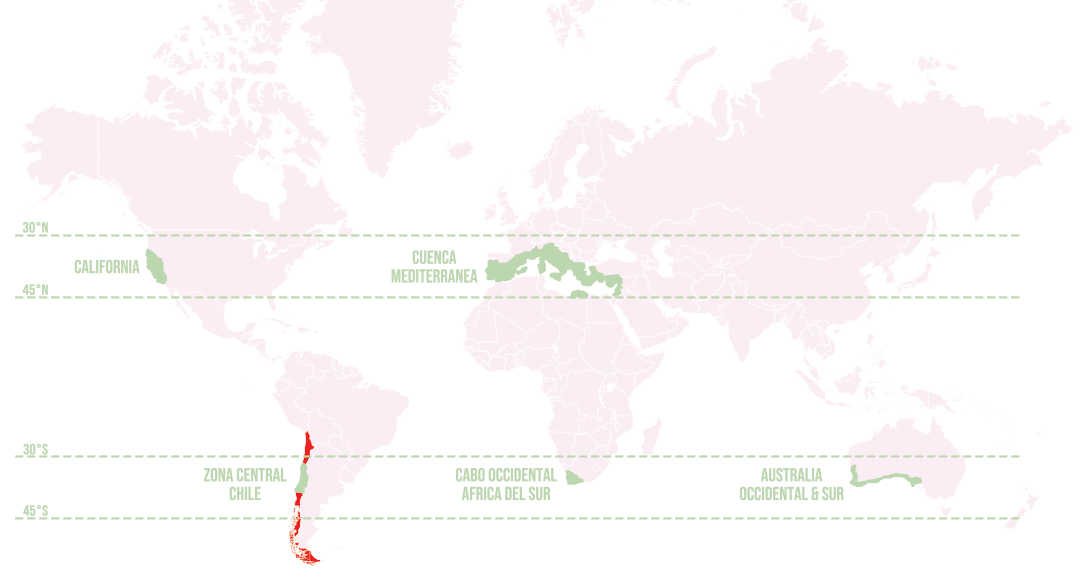
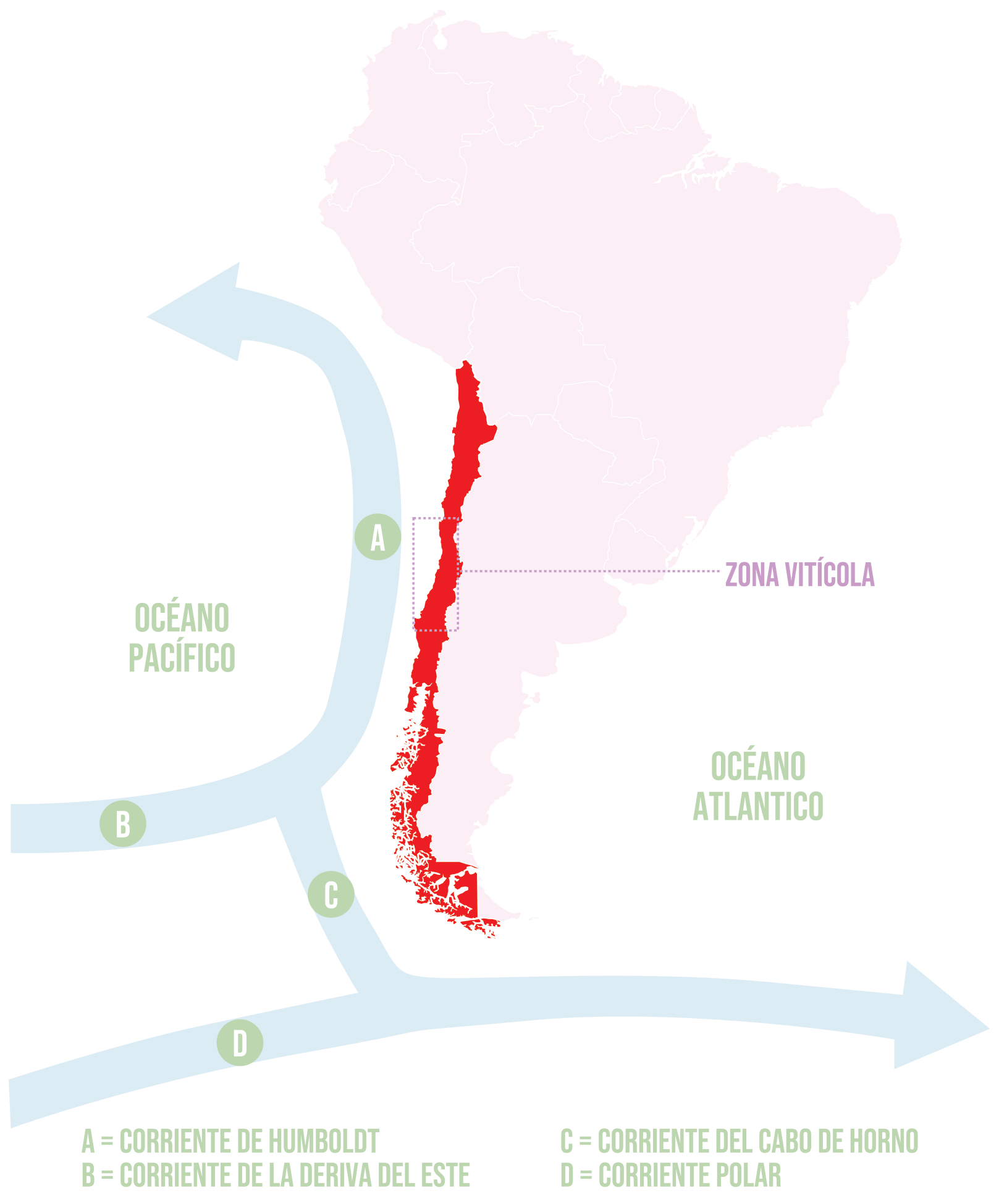
To fully understand Macatho's natural wines and Chile's winemaking heritage, it is essential to appreciate Chile's privileged geographical position in South America, its extraordinary geomorphology, and the unique climatic conditions that make it an exceptional terroir for grape cultivation. Chile stretches as a long, narrow strip along the western coast of South America, between 17°30' and 56°30' south latitude. Over 4,300 km long from north to south (equivalent to the distance between Spain and Russia) and with an average width of only 177 km, the country boasts a unique climatic, landscape, and soil diversity. Its borders are defined by imposing natural barriers: • To the north, the Atacama Desert, considered one of the driest places on Earth. • To the east, the imposing Andes Mountains, which act as a natural wall against Argentina. • To the west, the vast Pacific Ocean, traversed by the cold Humboldt Current. • To the south, Patagonia, with its deep fjords, ancient glaciers, and intricate channels. This unique geographical configuration gives Chile a high degree of natural insularity, which has historically protected its vineyards from devastating pests such as phylloxera (Daktulosphaira vitifoliae), which wiped out most of the vineyards in Europe and other regions of the world in the 19th century. In addition, a climate particularly favorable for healthy and sustainable viticulture: the stabilizing influence of the Humboldt Current ensures dry, cool summers in many areas, drastically limiting the incidence of fungal diseases such as downy mildew (Plasmopara viticola). Thanks to this unique combination of natural isolation and privileged climatic conditions, Chile is one of the few countries that still preserves century-old vineyards without rootstocks (from the pre-phylloxera era), planted on their own rootstock, where it is possible to develop viticulture with minimal intervention. At Macatho, we work precisely within this exceptional context of the dry interior of southern Chile, revitalizing old vineyards of heritage grape varieties such as País, Cinsault, Chasselas, Muscat of Alexandria, and Carignan, to produce natural wines that express this privileged territory with purity and authenticity.

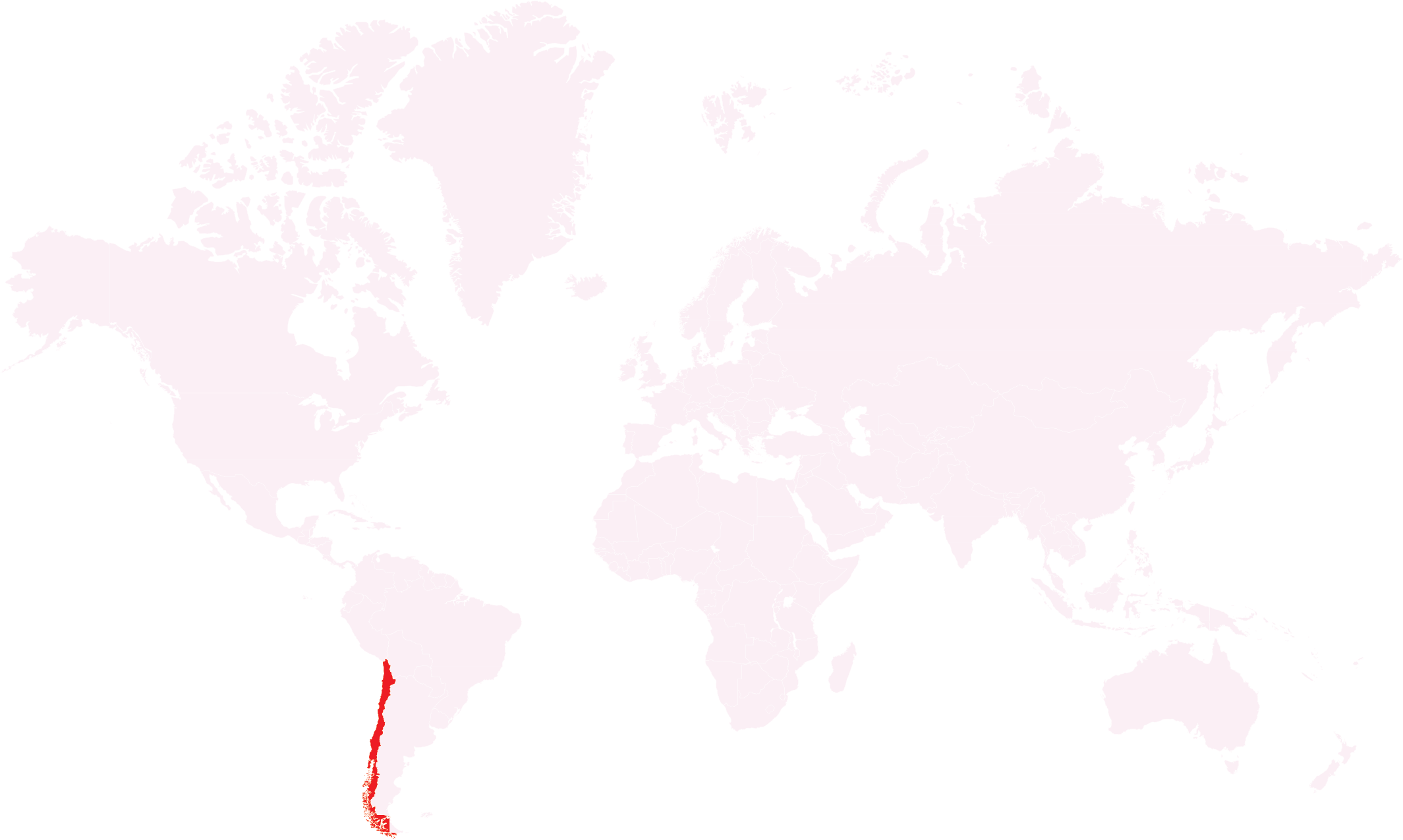
A strip of southern land sculpted by mountains
Chile, one of the southernmost countries in the world along with Argentina and New Zealand, stretches as a thin strip of land along the Pacific coast of South America. Its capital, Santiago, occupies the geographic center, while Chillán—capital of the Itata Valley and home to Macatho—lies 403 km to the south, roughly halfway along mainland Chile, between the Itata River to the north and the Bío-Bío River to the south.
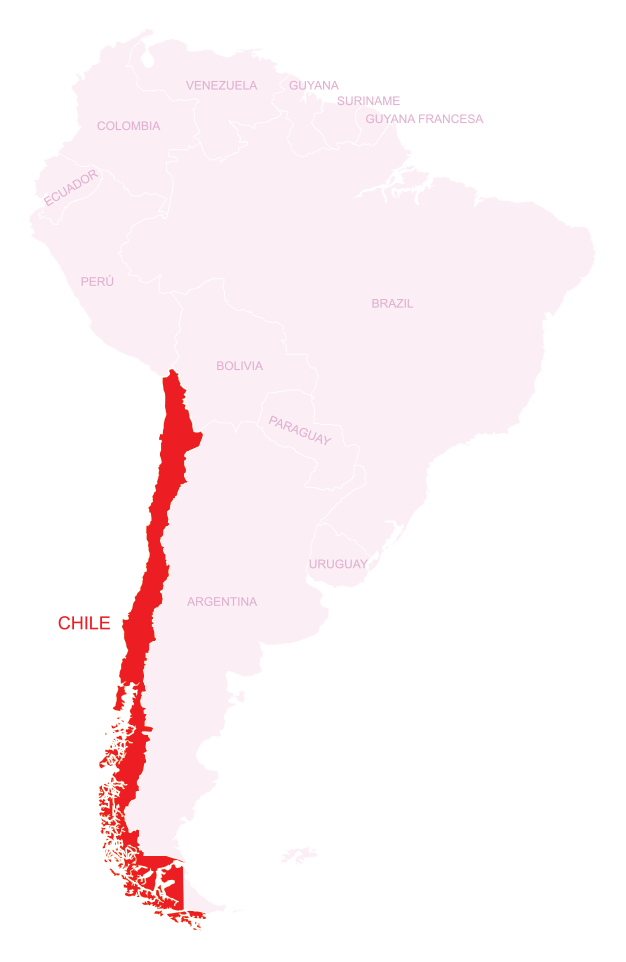
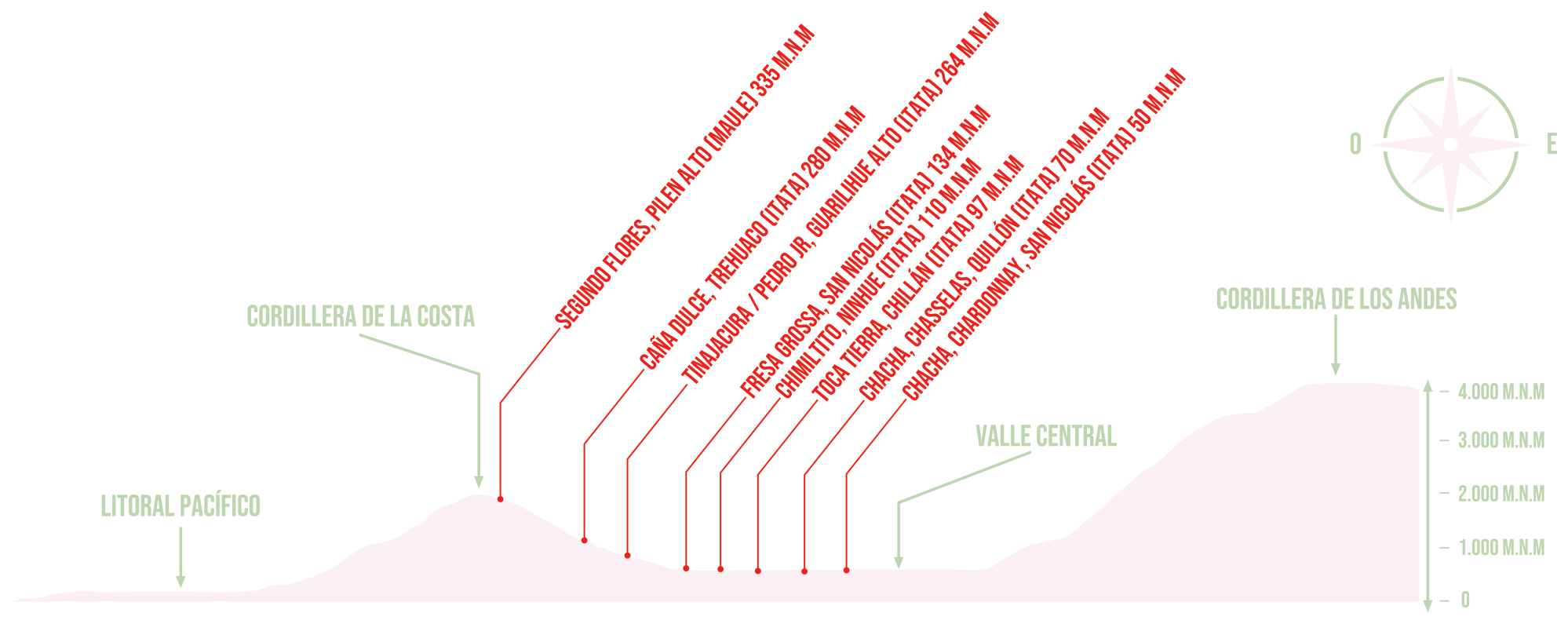
The current topography of Chile is the result of the Andean orogeny , the great tectonic process that has shaped the western margin of South America over millions of years. This process first formed the Coastal Range, an ancient and eroded mountain range bordering the Pacific Ocean, and later raised the Main Range or Andes, the imposing border barrier with Argentina.
These two parallel mountain ranges—the Andes and the Coastal Range—occupy 80% of the territory, leaving only 20% for the central valley and the coastal strip. Chile is, in essence, a country of mountains.